southland Merchants

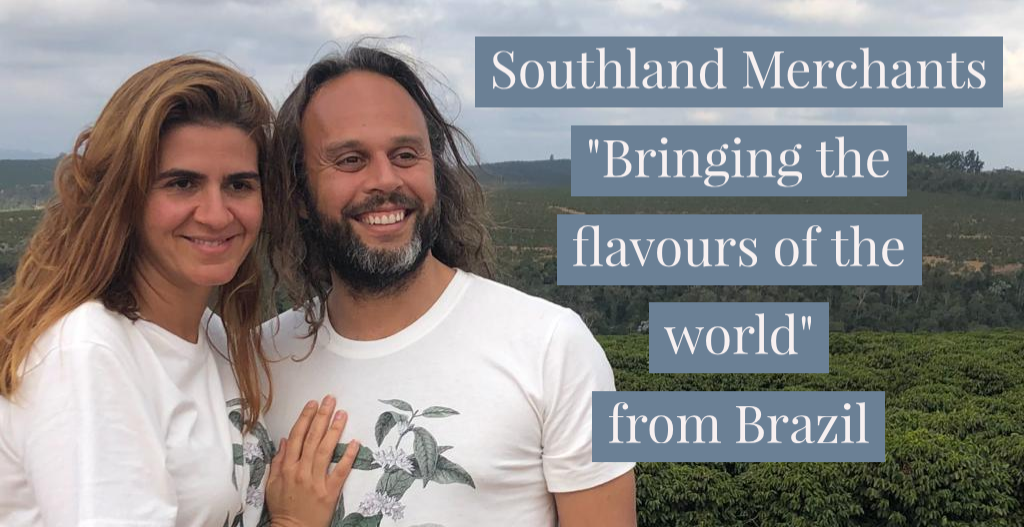
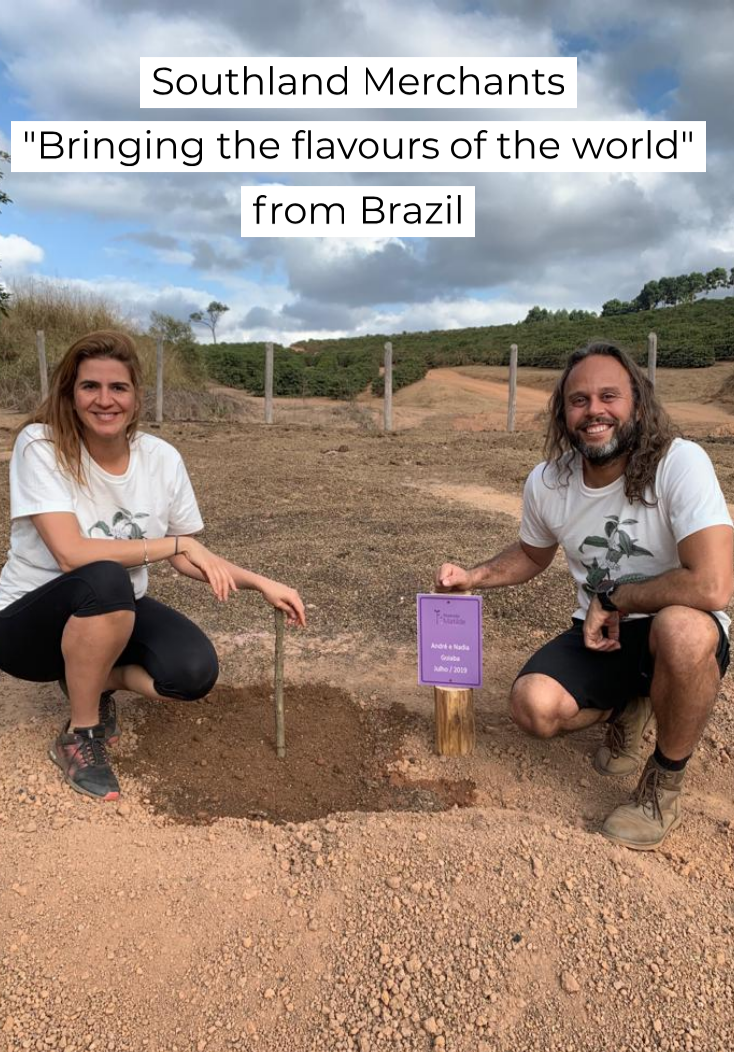
Andre Selga and Nadia Moreira have been in the coffee business for a decade now. After establishing connections with friends and farmers in Brazil, they brought their business to Australia in 2017 to break into the specialty coffee market. They call themselves “coffee hunters,” always in search of the best bean to make that perfect cup of coffee. They have built their business on connections and mutual education with the farmers they work with. So far, the results have proven to be successful. We sat down with the couple to find out more about their coffee sourcing process and how they support farmers back home.

Brazil has been a major coffee producer since the 19th century, but it wasn’t seen as a source of specialty coffee for a long time. Andre and Nadia have been working on changing that, and they’ve started to see that change. “Brazil can deliver all the flavours of the world at once,” Andre says. He argues that Brazil is well positioned to supply the growing demand for specialty coffee. The agricultural techniques, landscape, and diverse microclimates in Brazil are all optimal for creating a variety of specialty coffees. And Andre and Nadia have been at the forefront of developing this specialty coffee and bringing it to Australia.

Andre and Nadia have maintained close ties to their home country, and often travel back and forth to interact directly with farmers. They have a team back in Brazil that participates in the market, getting to know the other farmers and traders in the business. “That’s how everything starts,” Andre says. “With the connection.”

Making the Connections

The farmers they connect with want to improve their crops. These farmers, who are seeking more knowledge, improving their techniques, and trying out new ways to optimize their crops in terms of avoiding pests and improving nutrition, tend to produce the best coffee.

Andre and Nadia’s tasting process is rigorous, cupping ten cups of coffee for each potential trade partner. The cups may be far from perfect, but the farms with the most potential produce exceptional flavours that can be brought out more with an optimized growing process.

When they find these promising farmers, Andre and Nadia offer a better price for the specialty coffee that they produce – at least three to four times that of other offers. This price, Andre argues, helps these small farmers afford to harvest only the ripe cherries over multiple passes. Their above-market-rate pricing also enables farmers to improve their growing process and produce truly specialty coffee.

One producer they connected with produced only 15 bags of specialty coffee in the year they first made contact. Nadia assured their support, and the following year she produced triple the volume and Southland Merchants bought her entire stock. The start of this successful relationship, Nadia says, was the result of an open dialogue and established trust.


Providing Support Where It’s Needed Most

In Brazil, where good healthcare and education may be inaccessible in some rural areas, farmers are often not as well-educated as farmers elsewhere. This is where Southland Merchants has stepped in to help support coffee farmers advance their education not only about the crop that they grow but also how to run the business side of things.

As Southland Coffee Merchants becomes more established in Australia, Andre and Nadia have become more confident about their growers and the future of specialty coffee in Brazil. They have seen the children of coffee growers return to the farm to help their parents, and the specialty coffee market has continued to flourish. “Now they have an opportunity to earn money in the industry,” Nadia says.


Meaningful Work

This career of coffee hunting is extremely meaningful for the pair. The greatest meaning, Andre says, comes from the connections they make with other people, and not only teaching, but learning from them, as well. “I think it’s a both-way learning process,” he says, “which brings a lot of joy to what we do on a daily basis.”

You can find Andre and Nadia on Instagram under the handle @southlandmerchants. Follow them for a series of videos on local coffee growers talking about their livelihood and the coffee growing experience.


Andre and Nadia’s Key Takeaways

  • Knowing the region from which your coffee is sourced, and especially developing connections with producers in the region, will help inform you of the market and any latent potential there.
  • Providing support to quality producers, whether through offering the best price or through educational feedback, will likely lead to better product.
  • When considering a new vendor, a rigorous tasting process may help you make the most informed decision.
  • Good coffee production involves a variety of factors – climate, pest control, soil nutrition, and people.
  • Connections – with producers, roasters, and consumers – all help create a feedback loop that helps produce the best coffee.
  • Working with coffee producers is a two-way learning process – you can learn as much from them as they can from you.

southland Merchants

Hospitality Point Of Sales For Cafe

These days, lots of experts recommend that restaurants and cafes install point-of-sale (POS) systems. As technology has advanced, more and more cafes and restaurants are using POS systems to manage transactions, payroll, and inventory. With all the different functions that a POS system can serve, it’s become a must-have for a majority of the hospitality industry.

Tyrone Ho, from Redcat POS, has been in the business for quite some time, so he knows exactly what cafes and restaurants might want out of their point of sale. We talked with Tyrone about how a POS system can best serve the hospitality industry.

What are Your Needs?

First of all, Tyrone says, consider the needs and goals of your establishment. Are you a small hole-in-the-wall café, or do you own multiple locations? Would you prefer your POS system be an all-in-one deal or would you rather have different functions handled separately? Do you have plans to grow your business in the next year or so? Depending on how you answer these questions, you may want to invest a particular kind of POS system.

Invest in Good Hardware

Hospitality POS For Cafe

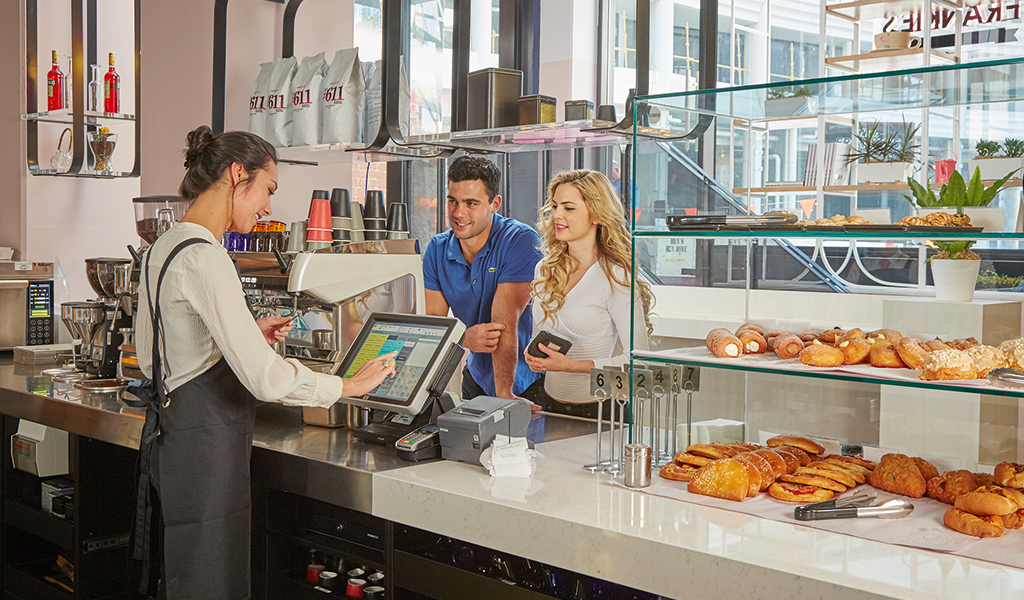
Tyrone advises café owners to avoid going for the cheap options. You want to invest in a good POS system up front, and that includes all the hardware. In the hospitality industry, where you’re making hundreds of transactions a day, you need some really robust hardware with touchscreens that can withstand a great deal of tapping and hammering. Sure, you can buy a touch-screen computer for a few hundred dollars at your local retailer, but these computers aren’t designed to be pressed a few hundred times a day for five years – or even three, for that matter. Good hardware will cost more, but it will last a lot longer, making the investment well worth it in the end.

Keep Your Connection Reliable

Another point to consider is the reliability of your Wi-Fi connection. Using tablet computers as your point-of-sale hardware are all the rage these days, but this setup won’t work for everyone. Using tablets, you end up relying a lot more on Wi-Fi and cloud storage, and this connection isn’t always stable. It may sound old-fashioned to recommend using a data cable for stable internet connectivity and computer monitors for your hardware. But the thing is, Tyrone notes, your hardware needs to be able to withstand a beating, and iPads don’t exactly hold up to snuff in that regard. And a secure internet connection will ensure that your system is always running smoothly.

However, that’s not to say tablet-based POS systems don’t have their place. If you’re a hole-in-the wall espresso bar that basically sells coffee and maybe five other items, these POS systems have all the functionality that you might need. They all can ring up orders, keep track of purchases throughout the day, and maybe even serve some accounting functions, as well.

Keep Your Data Secure

POS For CafePOS systems can do just about everything business-related these days. In addition to ringing up orders, they can handle your accounting and payroll functions, keep track of inventory, and even integrate a customer loyalty program. With all this data that your business generates on a daily basis, you need ways to back it all up. Traditionally, Tyrone says, there are two levels of data backup. The first level is located at the front of house, where the terminals are located, and backups are placed in between so if one goes out, the whole system doesn’t come crashing down.

The other level is at the back of house, where you have two options. You have it locally installed, where your backups would be stored on a PC or in-house server. Or, you can save it in the cloud. Unlike the traditional method, you can access these backups anywhere you have an internet connection.

Special recommendation: Start a Customer Loyalty Program

If you don’t have this already, Tyrone strongly recommends a customer loyalty program, which can also be integrated with a decent POS system. A long-term customer of his instituted a program where if you bought a lunch over a certain price, you’d get a free coffee. This paid off because often, the person who bought an expensive lunch to get that free coffee may also get a banana bread or muffin to go with it – adding further to his sales. You can also use these loyalty programs and apps to find out and cater to your target demographic. If you integrate it with your POS system, you can keep track of these data and adjust your promotions accordingly.

There are lots of possibilities with a good POS system, and you may find that the investment may be a money and time-saver in the long run. If you’re interested in learning more about Redcat, visit www.redcat.com.au or 1-300-4-REDCAT.

Tyrone’s Key Takeaways

  • When picking out a POS system, consider your business needs – different systems cater to different needs.
  • Pay for good hardware up-front, and you’ll be paying a lot less down the line.
  • When buying hardware, consider how robust it is, as well as its sales reporting and security functionality.
  • Also consider how you want to use your hardware – do you want it taking up counter space? Where do you want the cash drawer? Take these considerations into account for your interior design.
  • If you don’t have a very secure Wi-Fi connection, run a data cable through your system to ensure connectivity reliability.
  • Unless you’re a small establishment, an iPad-based system may not provide the functionality you need.
  • But if you want to institute mobile ordering, investing in an iPad or two will do you well.
  • If you want to access your business’s data anywhere, back it up with the cloud. Then you can pull it up wherever you have an internet connection.
  • Consider linking up a CCTV system with your POS system for added security for your cash tills.
  • If you haven’t already, set up a customer loyalty program – it’ll help attract customers, and integrated with a POS, cater to your target market.

cash register for cafe