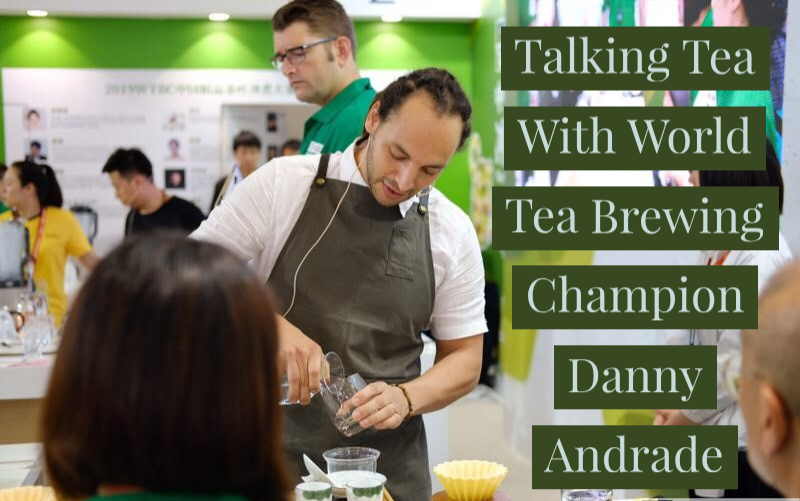
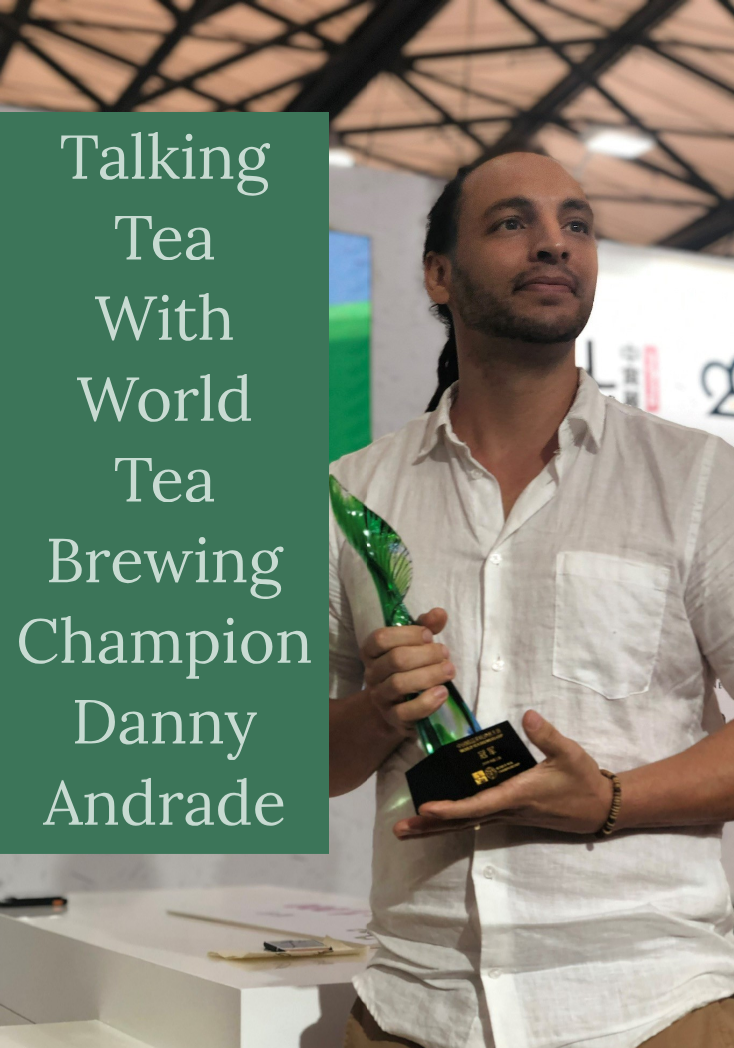
Talking Tea with Danny Andrade

world tea brewing champion


In Australia, coffee is king, with cafes on almost every corner. Interest in tea, however, is growing. Danny Andrade, originally hailing from Brazil – itself a big coffee country – came to tea knowing hardly anything about it. Yet his transition to tea was so smooth, he recently won the World Tea Brewers championship. We spoke with Danny about his experience, how he got into the competitive tea-brewing world, and how tea compares to coffee.

The World Tea Brewers Championship

Training for the competition was not easy, Danny says. The world of tea has a wealth of different varietals and brewing methods, and the first test in the competition was blind. You need to have a solid knowledge of how different teas from different places compare to one another. In the end, Danny attributes his advancement to the second round as a spot of luck, as he was competing against others who had a much more extensive background in tea.

In the final round, however, Danny really shone, brewing a signature tea from three different varietals brewed separately, then infused with a bit of raw Brazilian honey. He also employed coffee-inspired methods, such as the use of a diffuser to add some extra aromatic ingredients such as orange peel. The result was a unique mix of flavours, and it clearly made a splash among the judges. Looking at photos from the competition, and hearing about all the steps that Danny took to brew the tea, the process seems like a science experiment.  Combining the right amount of ingredients at the right time, at the right temperature, is indeed a science.

Danny didn’t just go from knowing nothing about tea to becoming a world tea-brewing champion overnight. It took some extensive training and preparation before participating in his first competition. When it came to tasting, he trained daily, searching for the subtleties in sweetness, acidity, and aftertaste that differentiated one variety from another. It also took some time to put together the plan for the winning brew, with careful examination of the primary characteristics of certain varietals and deciding how best to combine them.
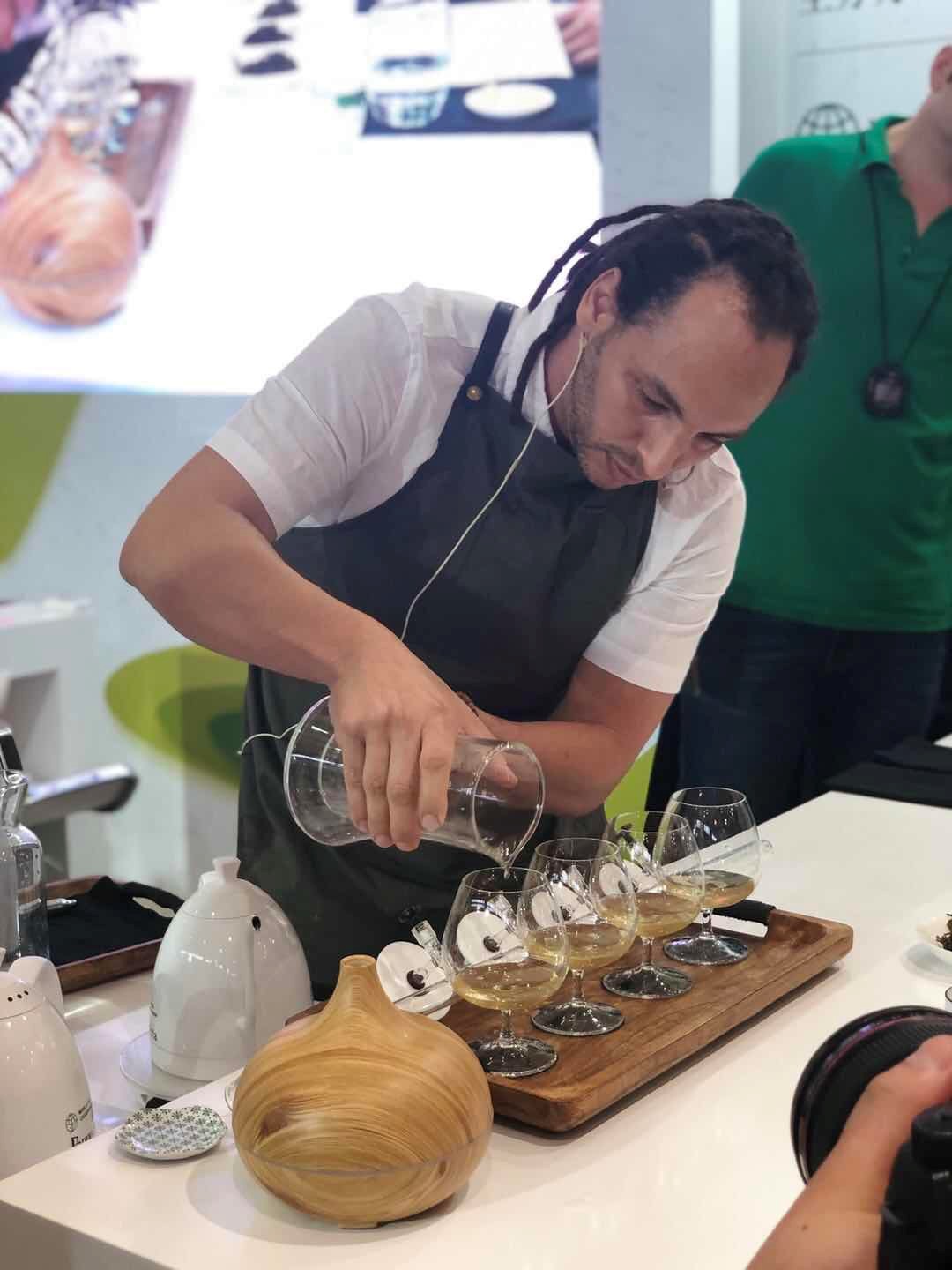
World tea brewing championshipsHow Tea Compares to Coffee

Many of Danny’s competitors hailed from China and Japan, countries with a rich and long-standing culture of tea. However, such a tea culture hasn’t really caught on in the West, where most people’s experience of tea is of dunking dusty tea bags into hot water. “We don’t know sometimes if it’s real tea,” Danny says. He argues that tea is actually much like coffee. Like coffee connoisseurs, tea experts discuss elevation, pH, microclimates, varietals, brewing methods, and other factors that help make the best cup of tea.

But tea is not exactly like coffee, and it’s not just in the part of the plant that’s harvested and brewed. The biggest difference? The age for the perfect tea. In the coffee world, a producer can wait five to ten years to get the best bean for a brew. In tea, however, that wait time extends to at least sixty years: an entire lifetime for a high-grade cup of tea! Danny has even made teas from century-old varietals such as Ya Shi Xiang.
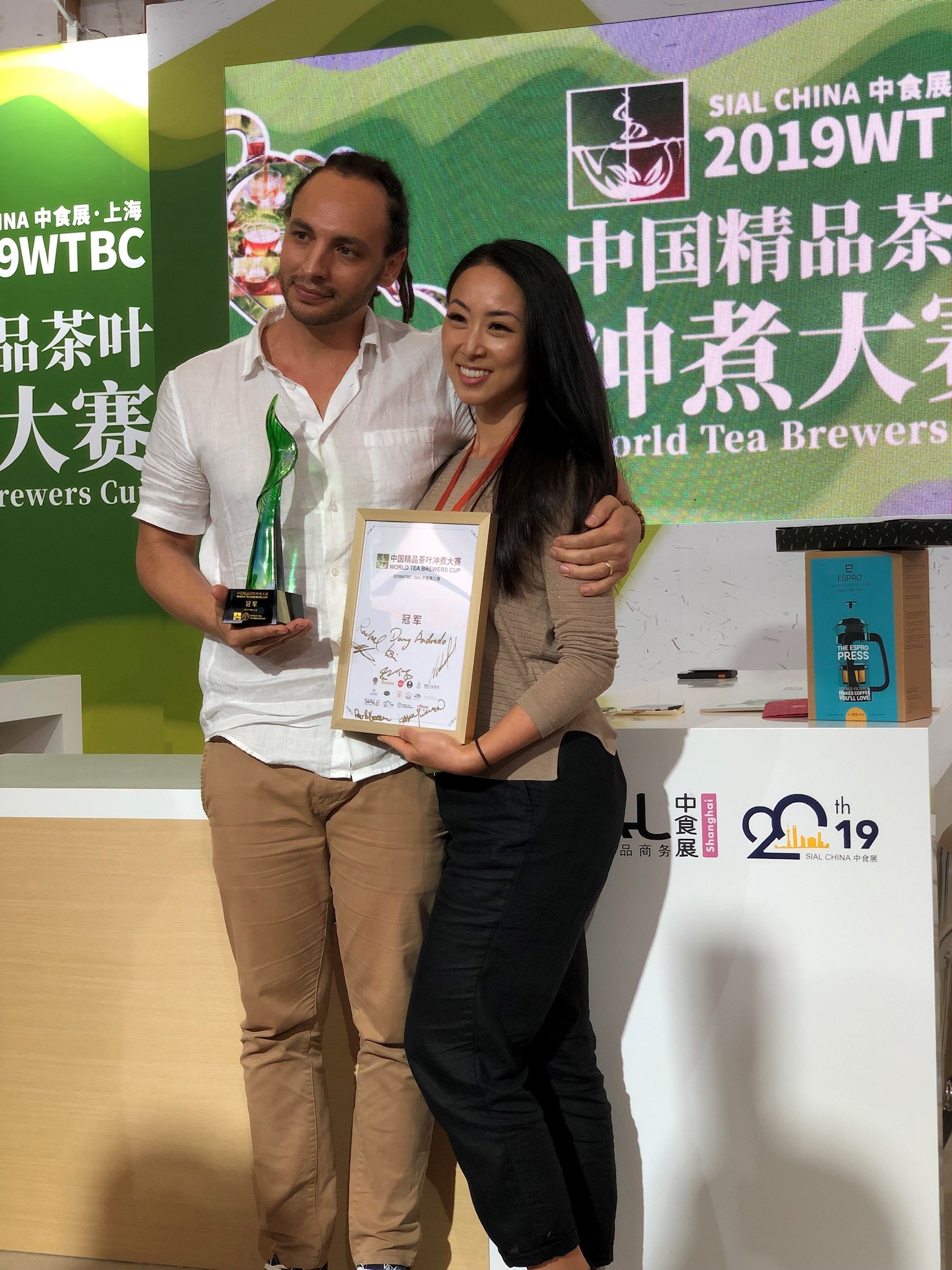
Danny Andrade World Tea Brewing ChampionLearning More

Danny advises newcomers to the world of tea to forget about tea bags and start with tea leaves. This is how tea-drinking cultures consume tea, and it’s the best way to evaluate the quality of the tea. Your local supermarket is unlikely to house high-quality tea, so search for specialty shops and ethical sources. Better yet, get in touch with producers directly. But it’s not just about the tea leaves themselves. Discuss brewing methods, the water temperature, and the different tastes of different teas.

The next step, whether you’re a consumer or an owner of a café looking to branch out into tea, is to brew your own tea. Even with a high-quality varietal, it may take some time to brew the perfect cup, as tea brewing largely remains a manual process. Start with the recommended method, and feel free to experiment by adjusting temperature, the amount of tea brewed, or adding extra ingredients to infuse with it. And, if you’re interested in even more in-depth research, visit the countries where tea is a long-standing tradition to experience truly well-made tea and interact with experts.

Despite the fact that tea is one of the oldest continuously consumed products in the world, it remains largely unexplored territory in Australia. More and more people like Danny are discovering the immense possibilities of the drink and trying out some new things with it. And, thanks to the advent of the internet, the information is out there. It’s never too late, or too early, to embark on your own tea journey.

Danny can currently be found at 3Brothers Coffee, where he works as a relationship manager.

Danny’s Key Takeaways

  1. Want to develop your own taste buds? Train every day – sample the coffee, the tea, the food, and think carefully about how it tastes.
  2. Follow your own star, and your own instincts. Overthink a decision and you may lose a golden opportunity.
  3. Work out a good morning routine: drink water first thing in the morning, and try not to check your phone until an hour after waking up.
  4. If you want to learn more about tea, speak to people who are experts and experienced with the drink, whether you find them online or in-person.
  5. Everyone you meet has something to share with you. Listen to them, collaborate, and share knowledge.
  6. Whether it’s professional or personal, focus on building and maintaining strong relationships.
  7. The internet is an amazing tool, but be sure to take a step back sometimes and respect the moment.
world tea brewing champion

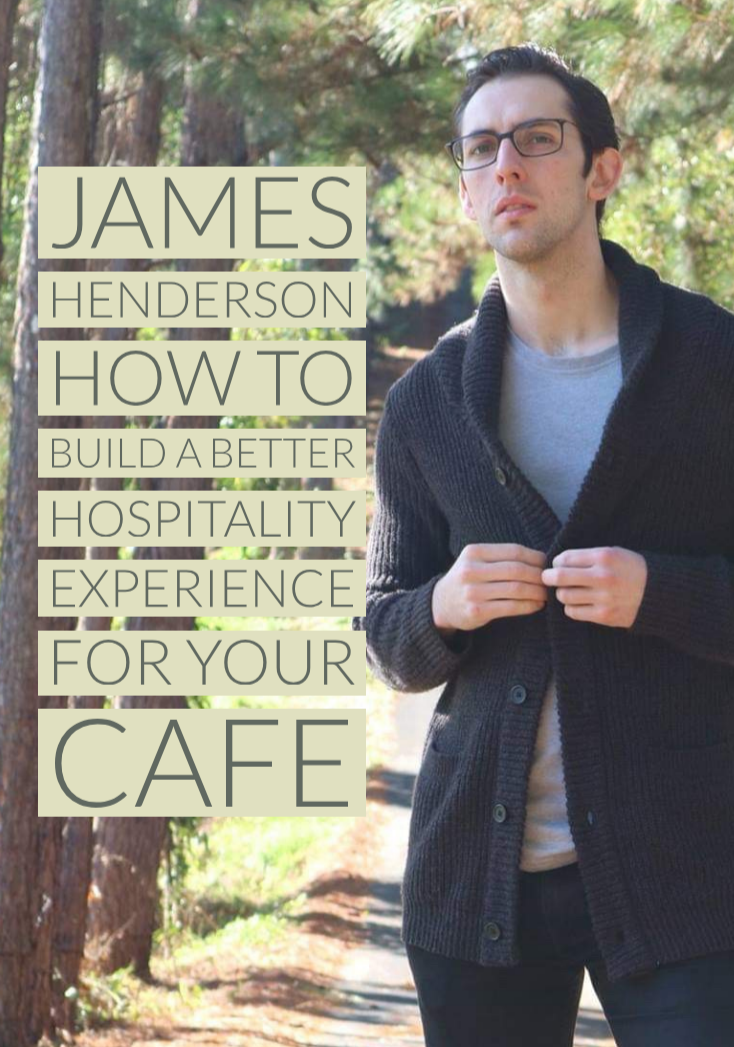
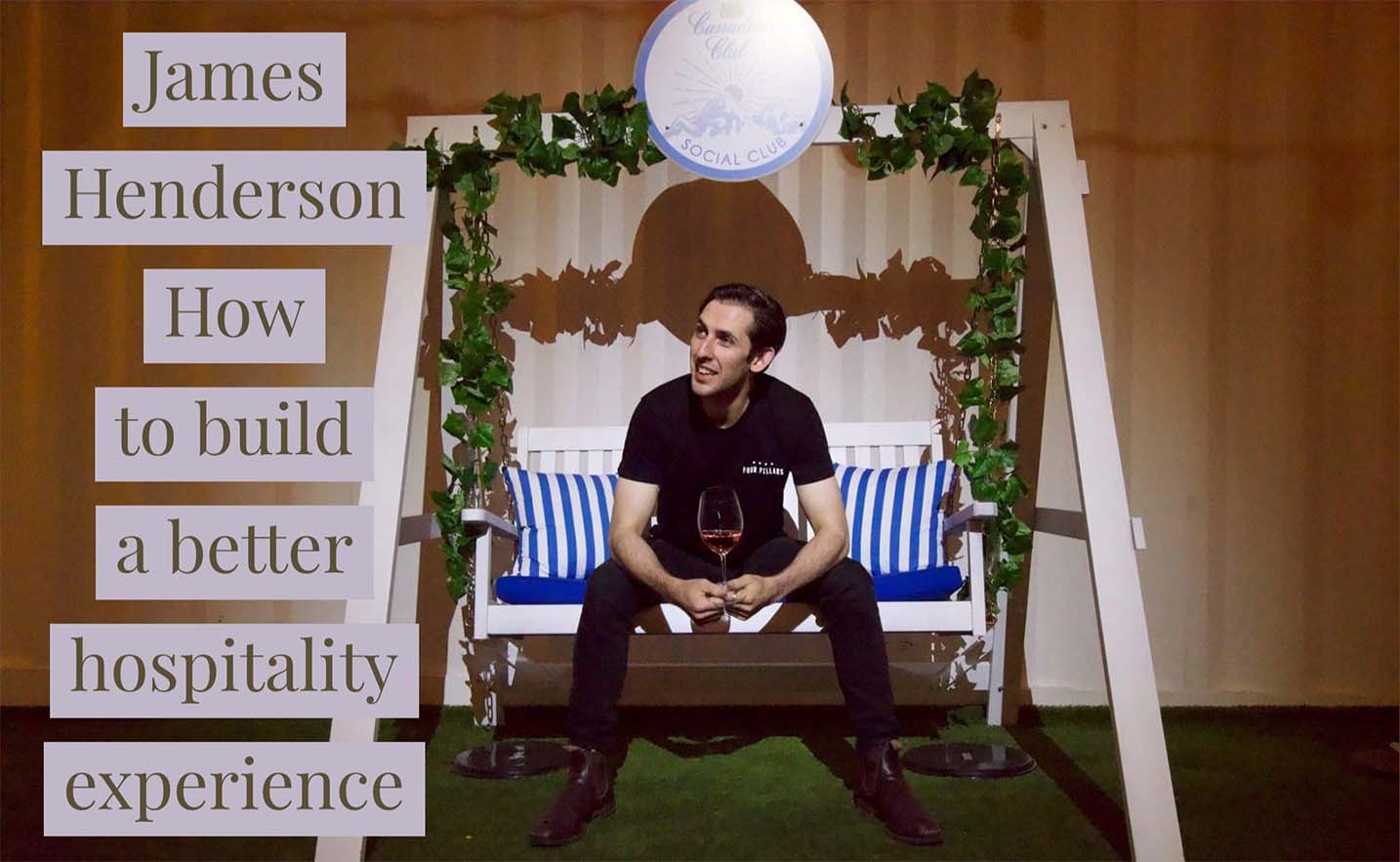
James Henderson Creating a customer service experience

James Henderson on How to Build a Better Hospitality Experience

James Henderson has added a lot of titles to his name: podcast host, hospitality innovator, consultant, speaker, and even accidental festival owner. He’s pretty much done it all in the hospitality industry, having worked in bars, restaurants, and hotels. On his podcast, Hospopreneurs, James has interviewed several big names in the industry, including Janine Allis and Phil DiBella. We talked to James about his full-circle experiences in the hospitality industry, from his time as a blender cleaner at Boost Juice to interviewing the founder on his podcast, and his tips for aspiring and struggling business owners.

Building a Better Hospitality Experience

Many bars, cafes and restaurants struggle: first with getting their name out there, then with building and maintaining customer loyalty. To start, focus on providing great products and great service. But it’s about more than just the food and drinks. Hospitality, James says, “engages all five senses.” It’s about the experience – visual, auditory, tactile, and olfactory – that the customer gets when they walk into an establishment. Whether it’s scent of Islay whiskey in a dark mahogany bar, or a bright café perfumed with herbal scents, the immediate sensory experience should attract customers, and tell them what your establishment is about.

The staff also helps complete the experience, for better, and for worse. Staff that welcome guests the moment they walk in, projecting an attitude of positivity and enthusiasm, will be passing it on to the customers. A lack of enthusiasm may do the opposite – or at least discourage any first-timers from visiting again.

Develop a Dedicated Staff

James has devised one simple method of testing his staff’s level of enthusiasm: high fives. If he offers up something as simple as a high five, and they can’t work up the energy to do more than a low five, it reveals to him that they’re not super committed to their role, and they probably don’t want to be there. If you’re not much of a high-fiver, you can develop your own simple metric to gauge individual dedication.

Not everyone, of course, comes into the job with the same level of enthusiasm. And, when things get busy or get tough, you need to keep up the morale so the staff can successfully manage. James suggests boosting morale by listening to staff, whether it’s their complaints, criticisms, or suggestions for solutions to a problem. Listening to staff and implementing their ideas empowers employees, making them feel like they have an influential role in the business. If they have an influential role, then they become more invested in the business’s success. Of course, this kind of advice goes well beyond hospitality, and can help make any business successful.

What Makes a Good Leader

James Henderson Creating a customer service experienceGood leaders aren’t just always learning – they’re also helping their staff learn and grow, too. Even if, in the end, a valuable staff member ends up leaving your establishment down the road. Help teach your staff how to work in a new role that would be the next step up in their careers, and find out what it is that they really want to do. “Your job as a manager,” James says, “Is to give people fulfilment in their career,” not to pigeonhole them into a certain role.

This sort of good leadership also helps create other leaders. Training staff for new roles, then training that staff to teach newcomers, creates a mutually beneficial cycle of teaching and learning that will continue throughout their careers. You also may learn a new thing or two yourself. James has always been open to learning something new, and that openness to new experiences will help make anyone become a great leader.

Hospitality and Technology

In addition to an interest in hospitality and music, James also has an interest in technology, dating back to his involvement in a start-up that developed a rewards app for bars. He sees exciting things happening in the hospitality industry as a result of this technology. The proliferation of data on both customers and venues will likely help enable both parties to really know what they’re getting into from the start. On the low-end side of hospitality, service is likely to get more efficient and automated to keep costs low and quality consistent.

Despite the trend towards automation, James doesn’t see the human side of hospitality going away anytime soon. “I think that the bespoke creative nature of the industry will remain intact,” James says, “And you’re going to get human-driven experiences that will be more valuable.” It will always be important for humans to connect with one another, even across transactional relationships like those at bars and restaurants. Great people are the secret sauce for any great experience.

The most important thing to know when entering the hospitality industry, according to James, is understanding people. ” You need to understand human behaviour,” he says. “And understand the industry enough so that you can predict what customers want before they ask for it.” That understanding and connection, even if it’s over a few seconds or minutes, will ultimately make the difference for the customer.

Check out James’s Hospopreneurs podcast, or contact him for audio production services to market your hospitality business.

James’s Key Takeaways

  1. Always be open to learning something new, and to new experiences.
  2. Listen to people – you’ll never learn and grow if you don’t listen.
  3. Check out Simon Sinek’s book, Start with Why – or at least his TED talk on the subject.
  4. Consider the entire experience, from beginning to end, from the food to the staff interaction, when making changes to your establishment.
  5. Empower your staff by listening to their feedback and suggestions for improving the business.
  6. As a manager, it’s your responsibility to help your staff progress in their careers and transition into new roles.
  7. No matter how busy your schedule is, always make sure to take time out of your day to relax and think about things.

James Henderson Creating a customer service experience